Context #
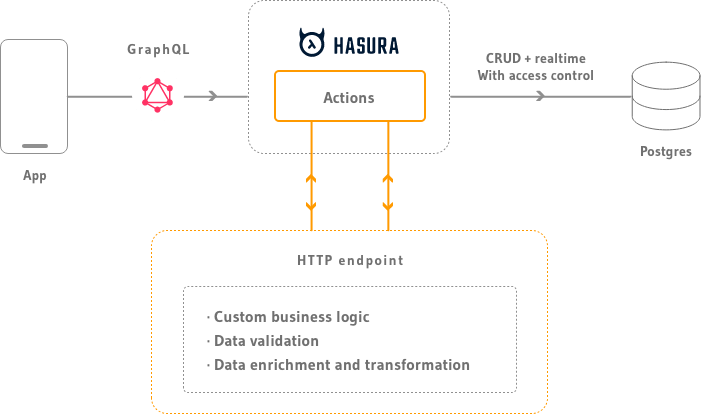
- Hasura is a Opensource GraphQL engine and a developer platform, which can generate GraphQL API directly from the database.
- It has built-in support for authorization and caching acclerating developer’s productivity.
- Hasura offers a managed service (public cloud hosted) for easy access.
Hasura has raised $100M Series C funding in February 2022 (source)
Setup #
Cloud-managed service by Hasura: https://cloud.hasura.io/
It can be deployed to Azure, Google Cloud, AWS, Render and others.
It provides creating a database (Postgres) in partnership with Neon.
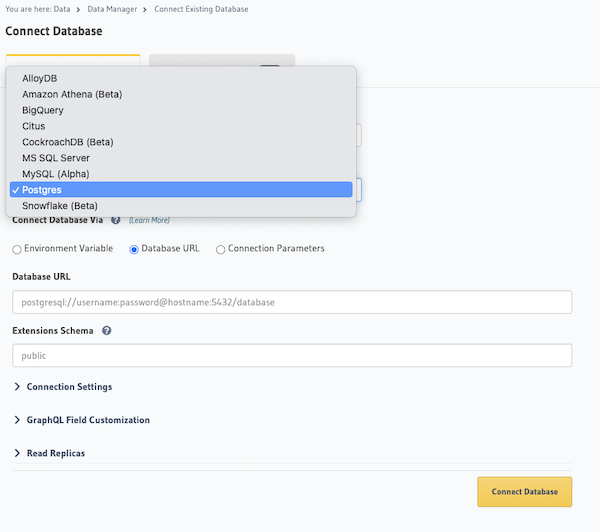
You can connect below databases:
It uses Docusaurus for documentation.
Pros/Cons #
Pros:
- Helps to acclerate development considering the easy way to create GraphQL based API from the database
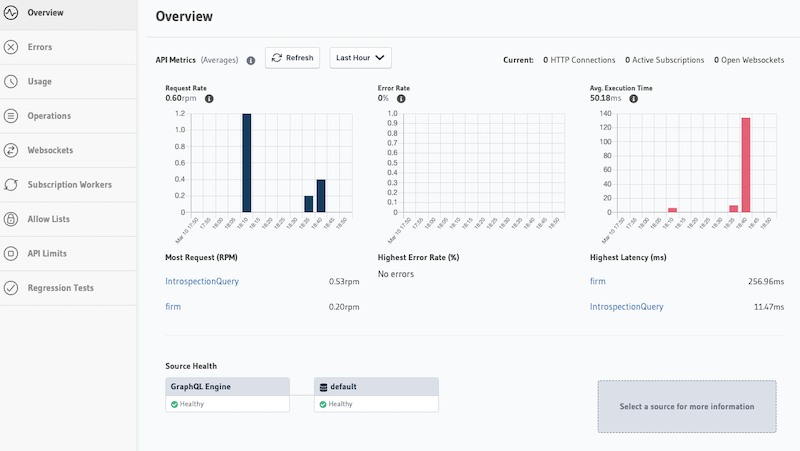
- Provides out-of-the-box caching, monitoring, custom queries (Actions), event-based processing (Event Trigger), and more.
Cons/Cautions:
- For financial services, connectivity with Hasura-managed Cloud will be a concern. Alternatively, it can hosted by the enterprise.
- Scalability and support in case of production issue (considering the scale of the organization)
- Good for simple use-cases exposing data as CRUD, need to explore more on complex business-logic components.
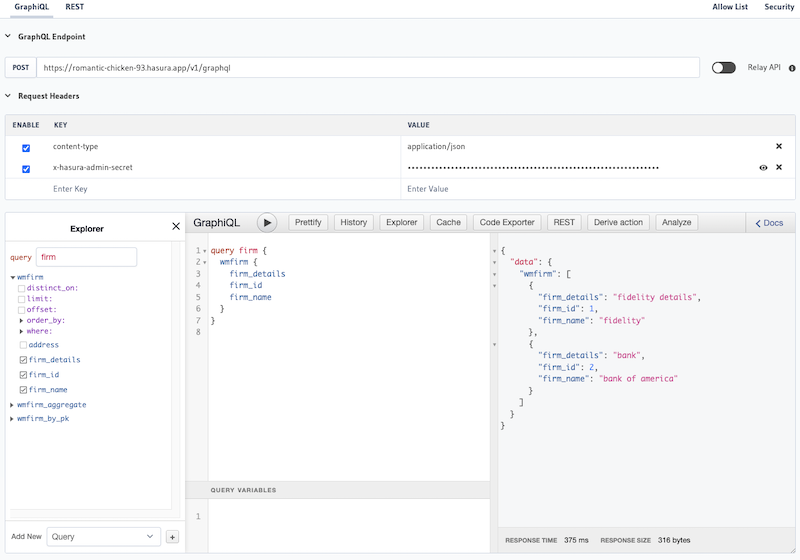
Hasura Console #
- Interface to publish API:
Other Competitors #
Architecture Patterns #
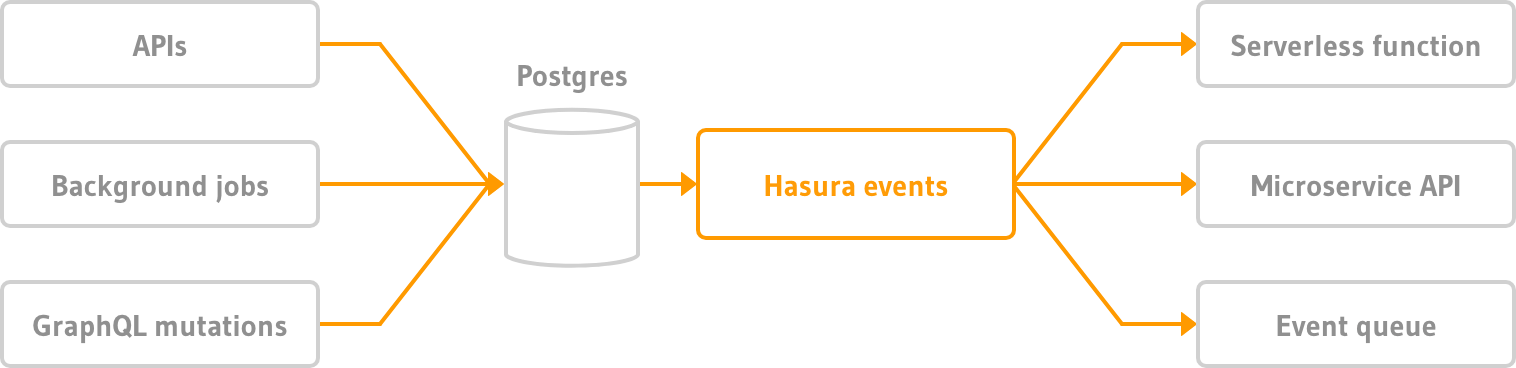
Event Triggers (captures events (insert, update, delete) on a specified table and then reliably calls a HTTP webhook to run some custom business logic)
Custom queries or mutations: